Isabella Lake Fishing Derby Grows From Local Idea Into a Valley Tradition
By Spencer Shepard, Kern Valley Sun
The Isabella Lake Fishing Derby did not begin as a large-scale attraction or a long-running tradition. It began as a local idea at a time when the Kern River Valley was looking for ways to bring people to the lake and support area businesses.
According to longtime organizer Tom McKinney, the concept took shape after Pat Norris, a local business owner, brought in an application from another lake’s fishing derby and suggested Lake Isabella could host one of its own. From there, the idea moved quickly from conversation to action.
McKinney said he approached Community First Bank and secured seed money to launch the first derby, with the understanding that the loan would be repaid from event proceeds.
“Luckily we were able to pay them back and had money left to start year two,” McKinney later wrote. “The rest is history.”
From the start, the derby was designed as a community-driven event. Volunteers handled registration, logistics, and fish planting, while local businesses helped spread the word and support early operations. The goal was straightforward: create an event that would bring anglers to the lake, generate activity in town, and give families a reason to return year after year.
That approach worked. By the mid-2000s, the derby had grown into one of the largest amateur fishing events in California. Current derby president Fred Clark remembers the scale of those peak years.
“I remember the years around 2006 and 2007 when it was shoulder to shoulder,” Clark said. “There was one year with over 8,000 anglers on the lake.”
Internal wrap-up records from 2008 show how large the event had become. That year, organizers printed thousands of entry applications and logged more than 5,000 participants over the three-day derby. Prize payouts topped $6,500, and derby headquarters operated out of the Moose Lodge, which served as a central gathering point for anglers and families throughout the weekend.
As participation grew, organizers refined how the derby operated, placing a strong emphasis on fairness. Fish were spread throughout the lake rather than released in a single location, a practice intended to give both shoreline anglers and boaters an equal chance.
“If you disperse them, you give more people a chance,” McKinney said. “There are more fishermen than anything else.”
Clark said those years also brought lessons that helped modernize the derby.
“That told us we had to evolve,” he said. “This can’t be one-size-fits-all.”
Despite its size today, the derby remains entirely volunteer-run.
Adult entry is $50 and covers all three days of fishing, while youth entry remains lower to encourage younger anglers and families.
“We want this to be something families can do together,” Clark said. “Not just dad out fishing.”
That family focus is visible throughout derby weekend, from early-morning launches to shoreline fishing spots filled with multi-generation groups. Clark said many participants have been attending for decades.
“There are people I see every year who brought their kids,” he said. “Now they’re bringing their grandkids.”
“That’s the magic of it,” Mckinney said “people still come back.”
The derby is traditionally held the weekend before Easter, a schedule chosen to align with school breaks and spring fishing conditions. The timing also encourages visitors to extend their stay and explore the surrounding communities, trails, and lake access points.
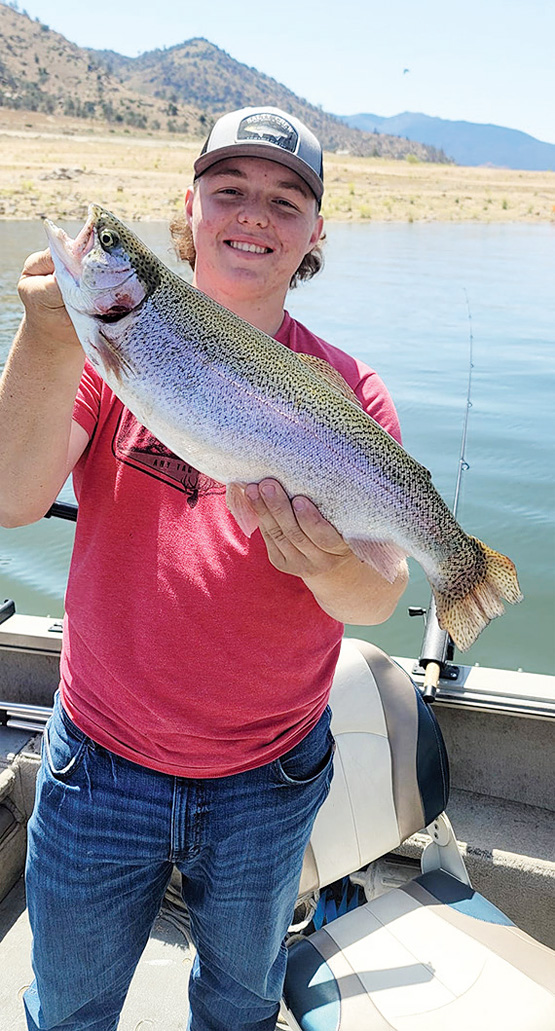
A happy angler during a previous Isabella Lake Fishing Derby.
PHOTO COURTESY ISABELLA LAKE FISHING DERBY/FACEBOOK
Asked where the derby will be five or ten years from now, Clark said its future will depend on the anglers themselves.
“The anglers are going to dictate that,” he said. “Our job is to listen and figure out how to make it happen.”
For McKinney, the reason the derby has lasted more than three decades is clear.
“This thing has lasted because of the community,” he said.
More information, including rules, schedules, and registration details, is available at https://www.kernrivervalley.com/isabellalakefishingderby.